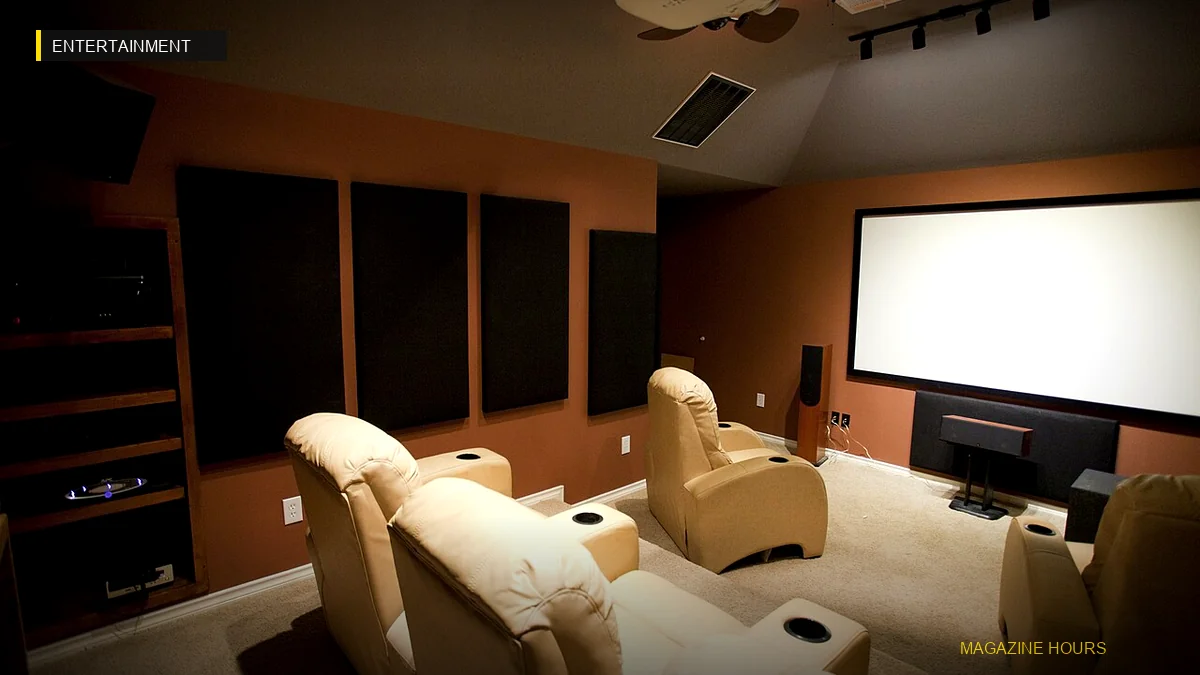
The Soundbar Deception
Consumer electronics manufacturers love soundbars because they are easy to package in long cardboard boxes and boast impressive digital specs: ‘11.1.4 Dolby Atmos in a Single Bar!’
In reality, sound is physical pressure waves moving through a room. You cannot cheat the laws of wave physics with digital signal processing. If you want dialogue intelligibility, visceral bass impact, and realistic panning, you need physical speaker separation and room acoustic management.

The Foundation: Room Acoustics Beat Equipment Every Time
A $5,000 speaker system inside a bare drywall room with hardwood floors will sound harsh, boomy, and exhausting to listen to. Acoustic reflections bounce off hard surfaces, colliding with direct sound and creating muddy frequency phase cancellations.
- Tame Flutter Echo: Clap your hands in the center of your living room. If you hear a sharp, metallic ringing ping, your room is acoustic glass. Add heavy velvet curtains, bookshelves filled with uneven books, and a thick woven wool rug.
- Acoustic Absorption Panels: Placing four 2-inch dense fiberglass or rockwool panels (like ATS Acoustics or DIY Owens Corning 703) at side-wall first reflection points costs $150 and yields a 5x improvement in vocal clarity.
The Proper 3.1 or 5.1 Speaker Geometry
Start with a dedicated AV Receiver (Denon, Yamaha, or Onkyo) and a clean 3.1 setup:
- The Center Channel: The workhorse of cinema. Carries 80% of all film dialogue. Angle it directly at ear height when seated.
- Left and Right Bookshelf Speakers: Form an equilateral triangle with your listening seat, aimed with a slight ‘toe-in’ directly at your ears.
- Subwoofer Placement: Run the classic Subwoofer Crawl to eliminate room modes (bass standing waves that create boomy dead zones).

Key Takeaways and Summary
To put these insights into immediate, practical action:
- Prioritize intentionality: High-value results come from focused execution rather than frantic overexertion.
- Audit your environment: The tools, systems, and routines you tolerate determine your daily cognitive quality.
- Iterate continuously: Treat your habits as ongoing experiments that compound over months and years.